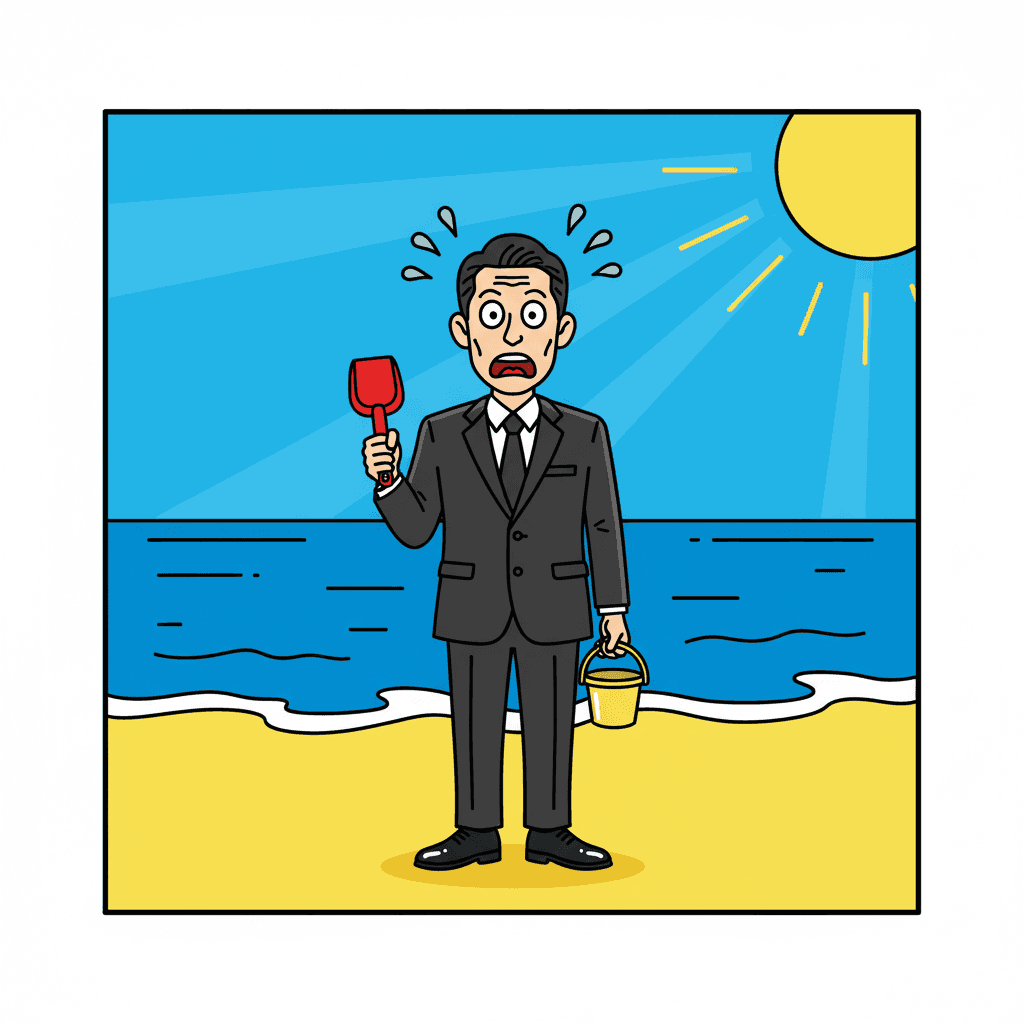
Why Are Japan's Beaches So Empty?
Apparently, going to the beach was a massive trend in the 80s, and we all just missed it. By about 90%, actually. 🏖️
The Great Beach Exodus
Get this: in 1985, Japan saw about 37.9 million people hit the sand for some fun in the sun. It was *the* summer activity. Fast forward to today, and that number has crashed to around 4.4 million. That's a 90% drop.
It’s so bad that the classic seaside shacks, or *umi no ie*, are a dying breed. One owner in Saga said that of the 20 beach houses that used to operate on his coast, only two are left. He says he's had to pivot to hosting flea markets and events just to survive, and that only 30% of his customers even go in the water anymore.
Too Hot, Too Sticky, Too Much Work
The reasons, I guess, are pretty relatable if you’ve survived a Japanese summer. The number one complaint is that it’s simply “too hot to go to the beach,” which feels deeply ironic. Why brave the record-breaking heat just to sit in more heat?
Then there's the hassle of it all. The sunblock, the inevitable sticky feeling, getting sand everywhere... for many, it’s just not worth it when you could be in a blissfully air-conditioned department store or cafe instead. The mass media screaming “DO NOT GO OUTSIDE” every time the temperature hits 35°C probably doesn't help either.
The Comedian's Theory
But here’s my favorite explanation, from comedian Daiki Kanechika. He reckons the whole beach scene was basically a social event. Specifically, it was a place where guys went to meet “gals” (gyaru), who were famous for their deep tans.
Then, beauty standards shifted. Women started prioritizing pale skin and avoiding sun damage at all costs. The gyaru stopped tanning, the bikinis got swapped for full-body UV-proof rash guards, and poof—the guys stopped showing up. The whole ecosystem just collapsed.
So now you have beach houses selling vintage clothes. You know, that makes a weird kind of sense.
Sign in to keep your name & data