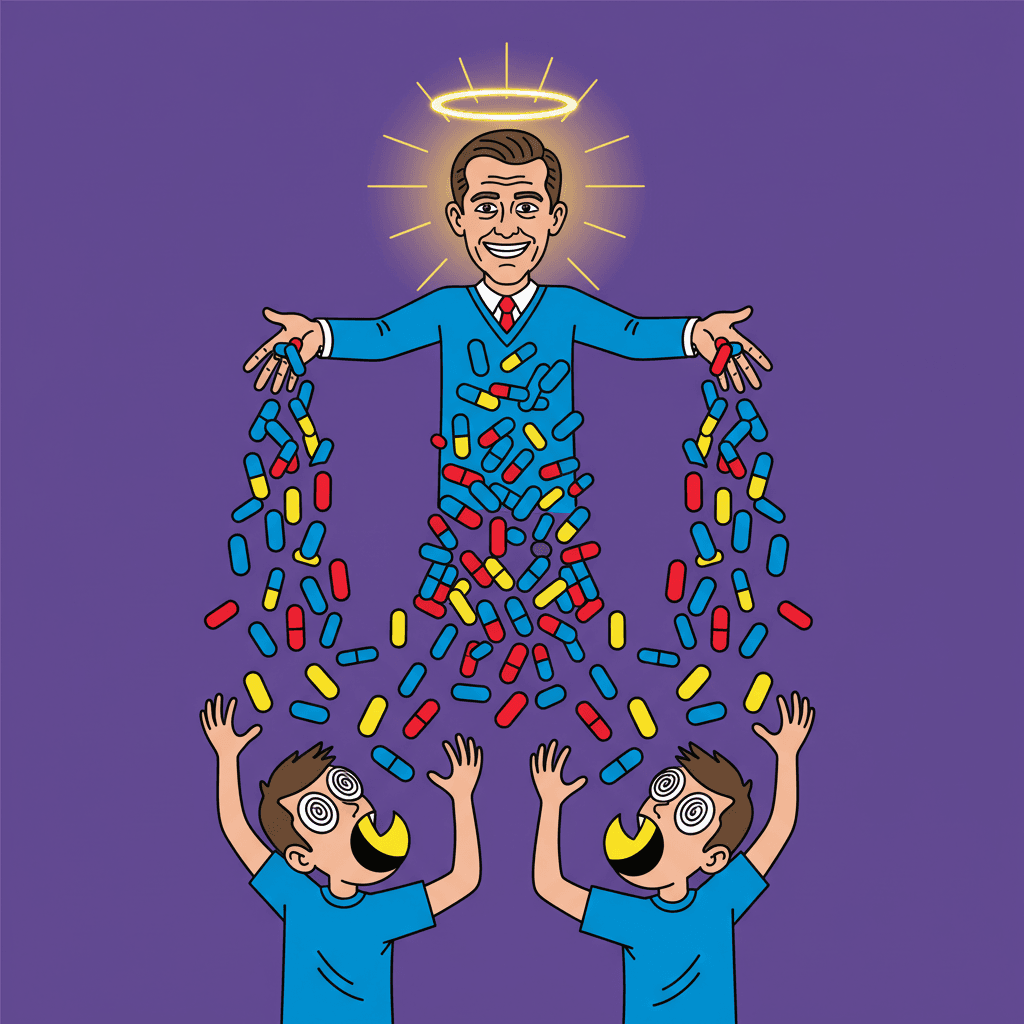
Osaka's 'Medicine Man' and His 20,000 Free Pills
In Osaka, an unemployed man got 20,000 prescription pills for free and became a local legend for... giving them away. 💊
The Medicine Man of Minami
If you've spent any time around Dotonbori, you know the area under the giant Glico Man sign. It's called "Guri-shita," and it's a popular hangout for young people. Apparently, it was also the turf of a 40-year-old guy the kids called the "Kusuri-ya-san" — the Medicine Man.
His business model was simple: he gave kids prescription drugs. Things came to a head when he allegedly gave two middle school girls 60 pills each. They were later found unconscious on a train. When arrested, the man claimed he was just helping kids who were struggling with life, calling it "volunteer spirit."
How Is That Even Possible?
Here's the part that feels very specific to how things work here. The man was on *seikatsu hogo*, or public welfare. Under this system, medical expenses are generally covered 100% by public funds to ensure people don't avoid treatment due to cost. A noble goal, but it created a loophole you could drive a pharmacy truck through.
This guy reportedly got around 20,000 pills—everything from sleeping aids to psychoactive drugs—from a single medical institution since February, all for free. He just had to ask, and the system, for a while, just kept providing.
The System Plays Catch-Up
The Ministry of Health is, of course, aware this kind of thing can happen. They've been trying to tighten the rules for years, flagging "duplicate prescriptions" from multiple clinics and "polypharmacy," where someone is prescribed more than 15 different drugs in a month. It sounds a bit like a game of bureaucratic whack-a-mole.
One clinic director pointed out the reality on the ground. Some patients get aggressive, threatening staff or posting bad reviews online to get what they want. Others might be enabled by struggling clinics that need the business.
The real solution, the director says, would be a universal electronic prescription system so doctors can see a patient's history in real time. But getting all clinics in Japan to adopt new tech is, well, you know how that goes.
Sign in to keep your name & data