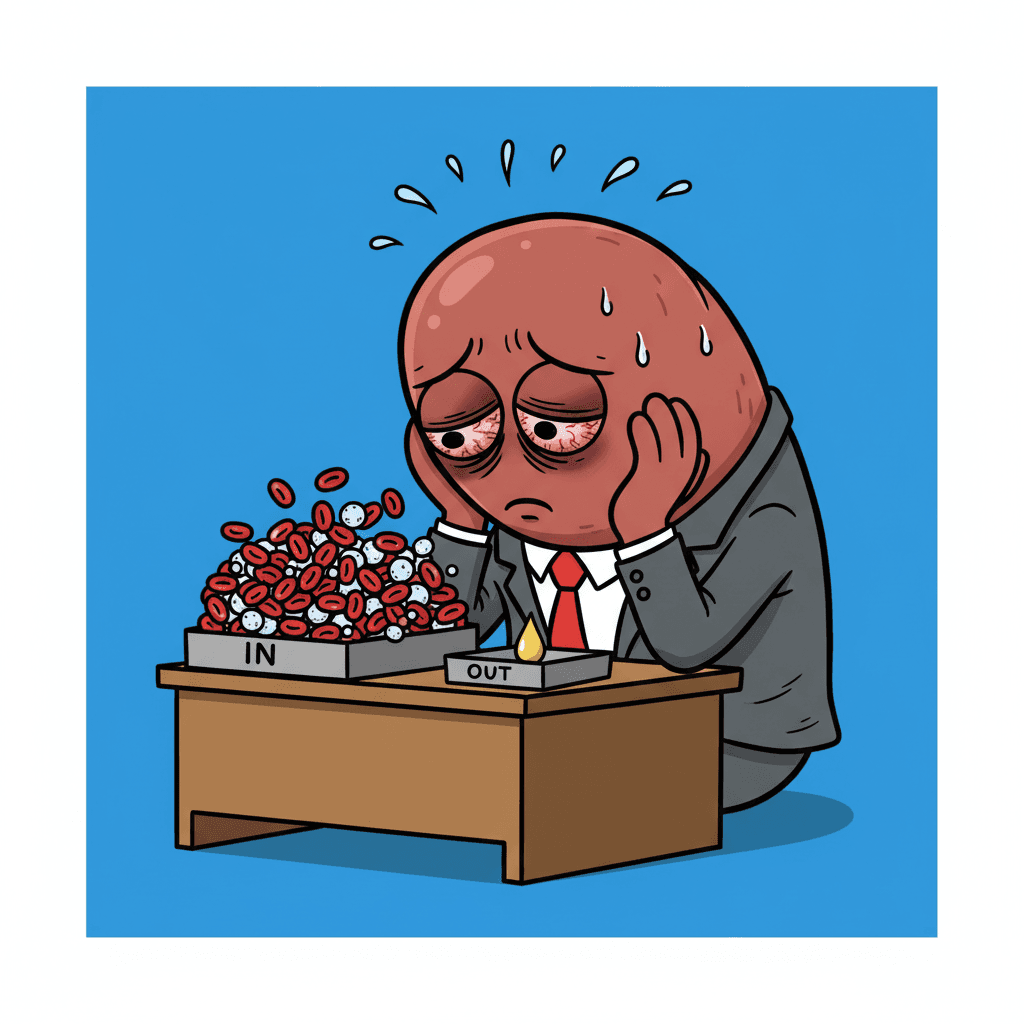
An Ode to Our Hardworking Kidneys
Your kidneys are the only thing standing between you and the consequences of that third highball.
The tiny, perfect bartender inside you
I never really think about my kidneys. They're just... there. In my back, somewhere, apparently. Doing something.
Turns out that "something" is filtering a liter of your blood every single minute. That's about 1,400 liters a day. From that, they create a bathtub-sized amount of... let's call it "pre-pee"... and then meticulously refine it down to the 1.5 liters you actually deal with. The original article called them the "ultimate dashi master," which is so perfectly Japanese. They’re sorting the good stuff from the bad, nonstop. 😩
They also manage your salt levels (hello, ramen broth), your blood pressure (hello, work stress), and even help make your bones strong. All while you're just trying to figure out which trash day it is.
The bill always comes due
So while you're enjoying that seasonal melon pan, a late-night FamilyMart run, or one too many drinks at the company `nomikai`, your kidneys are quietly putting in the overtime. They are the unsung heroes processing every delicious, questionable choice we make living here.
They don't complain. They just get on with it. But like a patient landlord in a tiny Tokyo apartment, there's a limit.
Is that foam... normal?
Here's the scary part: Kidneys are "silent organs." They don't send you a warning text. They just get quieter and quieter until one day they stop working. The symptoms, when they finally show up, are things we foreigners blame on everything else.
Feeling tired? Must be the long hours. A bit of swelling? Probably the humidity. Short of breath? My apartment is on the 5th floor with no elevator, of course I am. Itchy skin? Definitely the dry winter air.
But the one that's hard to ignore: foamy pee that doesn't go away. That can be a sign of protein leaking out, which is basically your kidneys crying for help.
Decoding your health check results
If you get an annual health check (`kenkō shindan`) from your company, you've probably seen that sheet of paper with a million numbers and acronyms. I usually just check my weight and then file it away forever.
But there’s a key number for your kidneys: eGFR. Generally, if it's below 60, it's time to pay attention. The problem is, once kidney function goes down, it's really hard to get it back. You can't just undo years of Strong Zero with a week of kale smoothies.
So maybe take another look at that paper. Your kidneys would appreciate it.
Sign in to keep your name & data