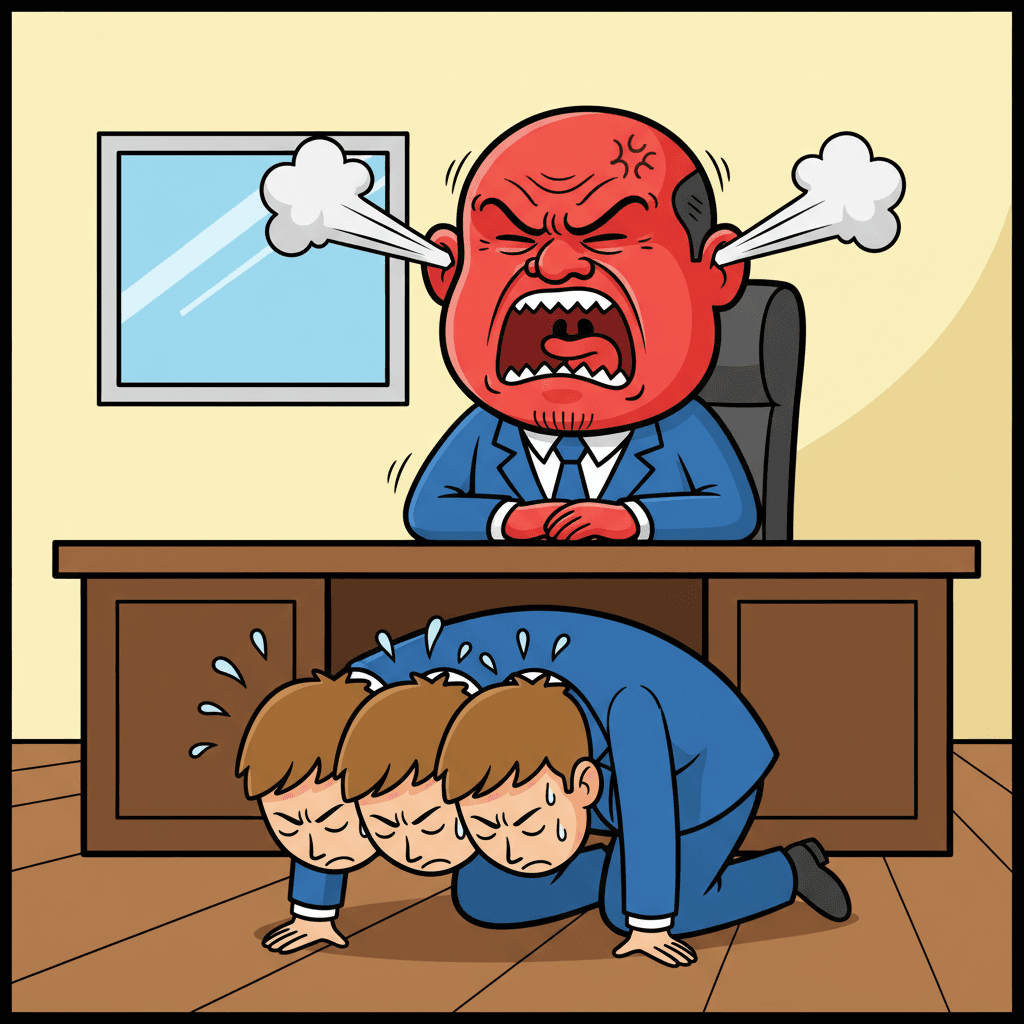
The Japanese Double-Apology Rule for Office Screw-Ups
Messed up at work in Japan? Apparently, apologizing once is the "second-rate" way to do it.
The Three Tiers of Saying Sorry
So I read this article by a psychologist, Naito Yoshihito, that broke down the art of the apology here, and it’s kind of brilliant. It categorizes people into three levels based on how they say sorry after ticking off someone important, like a boss or a client.
Third-rate people just... don't. They pretend it never happened and hope everyone forgets. We all know one of these. 😬
Second-rate people apologize once, right after the mistake. But if you bring it up later, they get defensive. You can almost hear them thinking, "Dude, I already said sorry, are you ever going to let it go?"
But the first-rate person? They do something different.
The 'First-Rate' Double Apology
The truly pro move is to apologize at least twice. You give the immediate, sincere apology when the mistake happens, of course. But then — and this is the key part — you apologize *again* the next time you see them, even if it's weeks or months later.
Just a quick, "By the way, I am truly sorry for the trouble I caused back then." My foreign soul cringes at the thought of reminding my boss of my past failures, but the logic is that it shows you're sincere and haven't forgotten the gravity of your screw-up. It builds trust.
It’s the difference between saying sorry and showing you're sorry. And it turns out there’s actual science behind why this works so well.
Why Your Brain Believes It More
Psychologists call it the "illusion of truth effect." Our brains are wired to believe something is more true the more we hear it. Hearing "I'm sorry" once might feel like they're just saying it. But hearing it a second time, on a different day, makes the apology feel more genuine.
Researchers at McMaster University and the University of California found the same thing. In one study, people rated a statement as significantly more true after hearing it twice (60% believed it) versus just once (44%).
So when you apologize again, your boss's brain registers it as, "Wow, they must *really* mean it." It’s a simple trick, but it can be the difference between them letting it go and quietly holding a grudge forever.
Also a pretty good way to judge the character of people around you, I suppose.
Sign in to keep your name & data