When Cleaning Up After Yourself Makes You a National Hero
That thing where you wash your own cup and suddenly everyone thinks your entire country is a marvel of civilization. 🍵
The Crime Scene
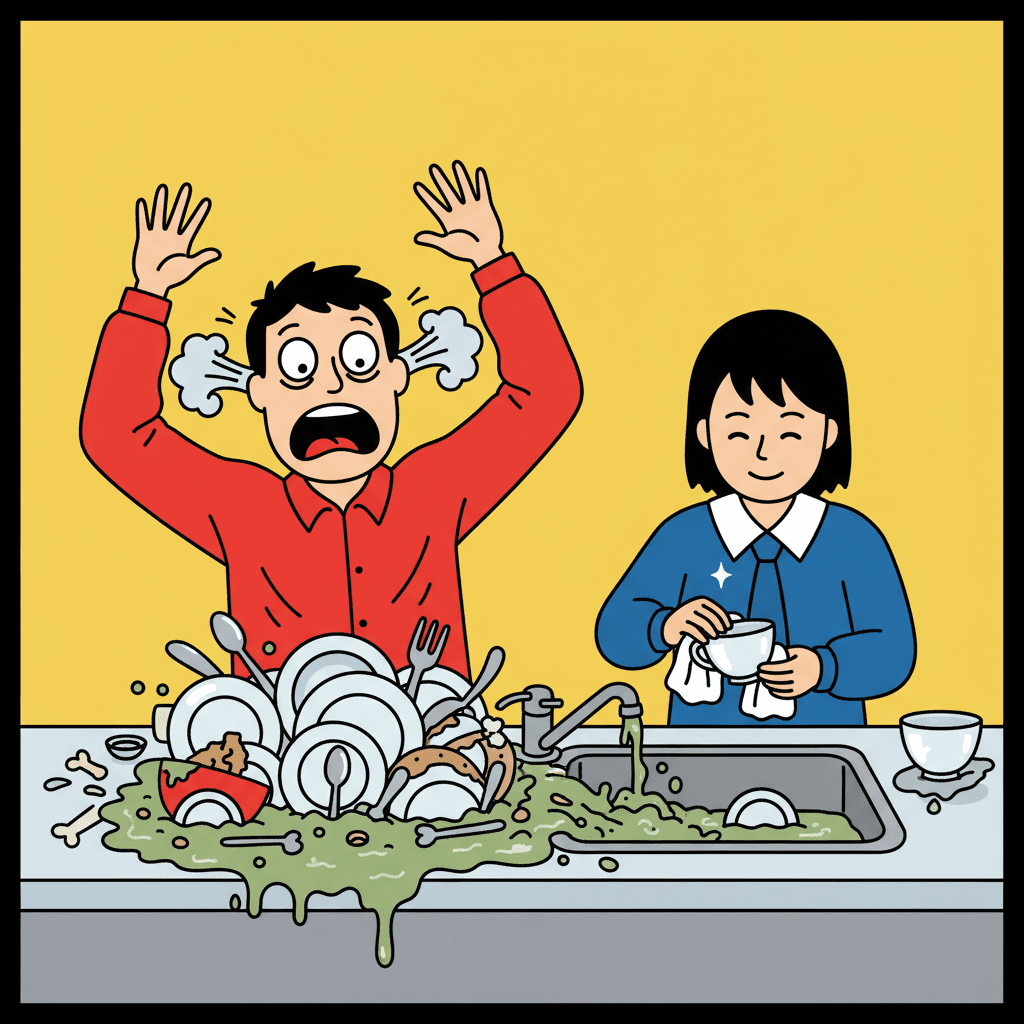
Picture a language school in Los Angeles. It’s got a shared kitchen space with a sink, a microwave, and a fridge. You know the scene. During lunch, it’s a flurry of activity. But sometimes, after the rush, a grim sight remains: abandoned dishes, half-eaten food, and mysterious spills left to congeal in the sink.
This exact scene was driving one American teacher up the wall. She’d find the mess and fume, “Again!? Who is it?!”
She said she sees it all the time, despite constant reminders. Her working theory: “I guess they assume someone else will clean it up for them. Or maybe they just don’t think it’s dirty.”
The Unlikely Heroes
But then, amidst her frustration, she dropped this little gem: “But I’ve never once seen a Japanese student do it. They just wouldn’t.”
She wasn’t just guessing, either. She was genuinely impressed, noting that the Japanese students were also rarely late, took their studies seriously, and were always considerate of the people around them. She was grateful.
So, to recap: the bar is on the floor, but by simply not leaving a crusty plate in the sink, you might be single-handedly upholding the reputation of 125 million people.
Japan's Secret Weapon
The article chalks this up to how kids are raised in Japan. From elementary school, you’ve got school cleaning time (soji), tidying up your own lunch trays, and a general emphasis on keeping shared spaces clean.
The whole idea that “you clean the space you used” gets drilled in early, along with a sense of consideration for the next person who has to use it.
Of course, not everyone from one country is the same. But it’s a wild moment when you realize a small habit you don’t even think about can look like a superpower somewhere else. So next time you’re dutifully wiping down the microwave in your share house, remember: you’re an ambassador. No pressure.